
Best Battery Chargers and Maintainers for Cars, Garages & Winter Storage (2026 Guide)
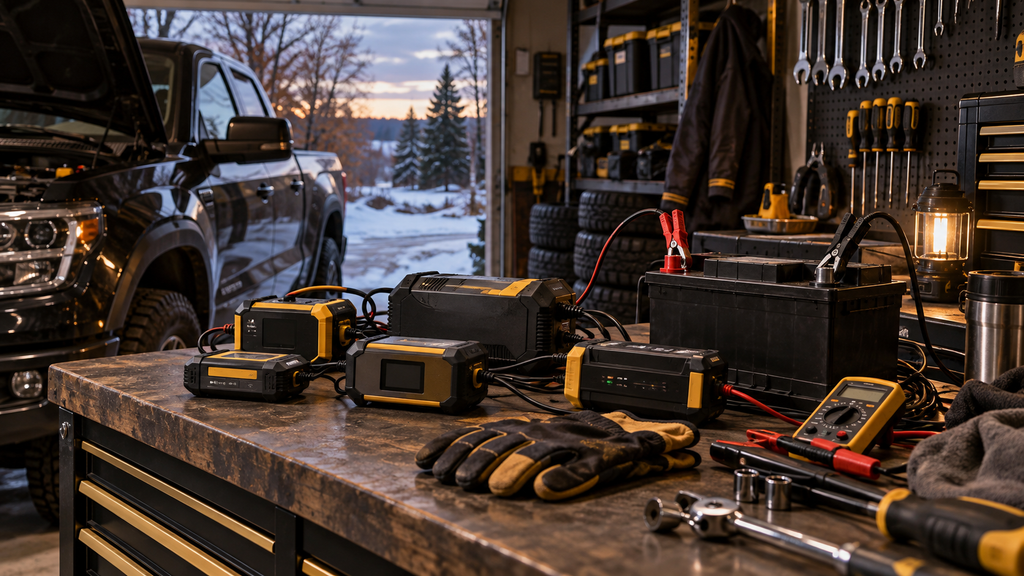
A dead battery in January is frustrating. A dead battery in a vehicle, mower, motorcycle, or seasonal machine that has been sitting for two months is even worse because it often could have been prevented.
A good smart charger can recharge a weak battery, maintain a stored battery without continuously pushing full power, and help keep vehicles and equipment ready when cold weather or long storage periods arrive.
The important part is choosing the right type. A 1-amp maintainer is useful for long-term storage but slow for recovering a discharged truck battery. A 10- or 15-amp charger works much faster, but it may be more charger than you need for a motorcycle or lawn tractor. Battery chemistry matters too.
This guide breaks down six practical options for daily drivers, trucks, garages, winter storage, motorcycles, lawn equipment, and vehicles that sit for long stretches.
Disclosure: As an Amazon Associate, HardWorkerGear may earn from qualifying purchases. This does not change the price you pay. We focus on practical recommendations that make sense for real garage, vehicle, workshop, and home use.
👉 Quick Tip: A jump starter and a battery charger solve different problems. A jump starter gets you moving now. A charger or maintainer is better for recovering and maintaining a battery when you have AC power and time.
Battery Charger vs. Maintainer vs. Jump Starter
- Battery charger: Supplies controlled power to recharge a discharged battery over time.
- Battery maintainer: Monitors a charged or mostly charged battery and supplies power as needed during storage.
- Jump starter: Delivers a short burst of high current so the engine can start immediately without waiting for a battery to recharge.
If your car battery is dead in a parking lot, a portable jump starter is the tool you want. If a convertible, motorcycle, lawn tractor, work truck, or second vehicle will sit for weeks or months, a charger-maintainer is the better preventive tool.
🤔 Something to Think About: Do not buy by amp rating alone. Higher output helps recover larger batteries faster, while lower output may be exactly what you want for long-term maintenance.
Quick Comparison: Best Battery Chargers and Maintainers
| Recommendation / Product | Best For | Why It Makes Sense |
|---|---|---|
| Best Overall NOCO GENIUS5 | Cars, SUVs, pickups, garages, storage | A useful 5-amp middle ground with 6V/12V and lead-acid/lithium support. |
| Best Low-Amp Maintainer NOCO GENIUS1 | Long-term storage and smaller batteries | Compact 1-amp charging makes sense when maintenance matters more than speed. |
| Best Fast Garage Charger Schumacher SC1280 | Garages and faster automotive charging | A 15-amp charging mode gives it much more recovery speed than a small maintainer. |
| Best Premium Lead-Acid / AGM CTEK MXS 5.0 | Stored cars, AGM/EFB batteries, cold-weather garages | Temperature compensation and long-term maintenance make it a strong specialized option. |
| Best for Larger Batteries NOCO GENIUS10 | Full-size pickups and larger batteries | Ten amps and support up to 230Ah give it more charging headroom. |
| Best for Seasonal Equipment Battery Tender Junior 750mA | Motorcycles, ATVs, lawn tractors | Low-output smart maintenance is well matched to small lead-acid batteries. |
Quick Take: The NOCO GENIUS5 is the balanced all-around pick. Choose the GENIUS1 when maintenance matters more than speed, the Schumacher SC1280 for faster garage charging, the CTEK MXS 5.0 for premium lead-acid and AGM care, the GENIUS10 for larger batteries, and the Battery Tender Junior for small seasonal equipment.
What Matters Most in a Battery Charger or Maintainer?
- Battery chemistry: Flooded lead-acid, AGM, gel, EFB, and lithium batteries do not all use the same charging profile.
- Charging output: Low-output units are useful maintainers; higher-output models recover larger batteries faster.
- Battery size: Check the manufacturer’s supported capacity range instead of assuming every 12V charger fits every 12V battery.
- Storage vs. recovery: A maintainer is enough for healthy stored batteries. Repeated recovery work justifies more amperage.
- Cold-weather use: Temperature compensation and extra capacity can be useful, but always follow operating-temperature limits.
Best Overall: NOCO GENIUS5
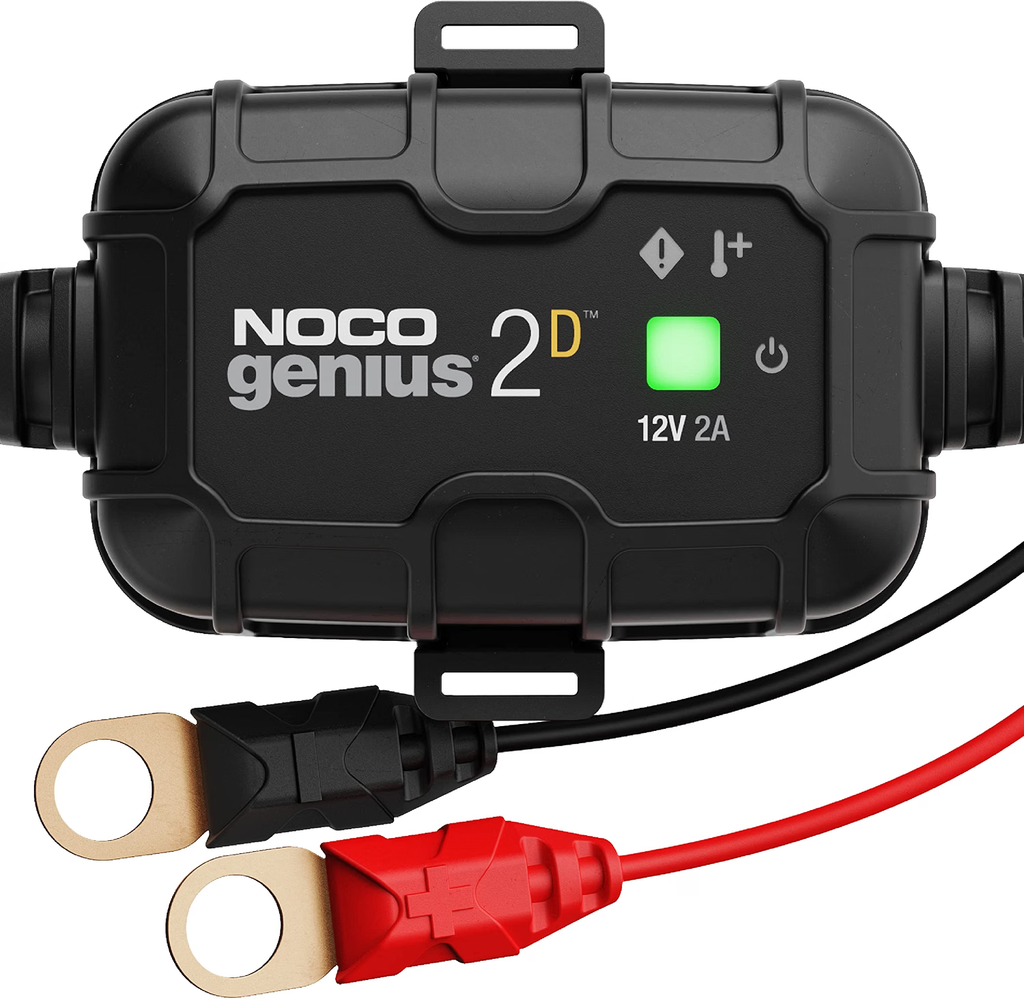
Best Overall: NOCO GENIUS5
Best for: Cars, SUVs, pickups, home garages, stored vehicles, and households with several battery types.
Why it makes sense: Five amps is a useful middle ground between a slow maintainer and a larger garage charger, while 6V/12V and lead-acid/lithium compatibility cover many common batteries.
NOCO rates the GENIUS5 at 5 amps with support for 6V and 12V batteries, including common lead-acid types and compatible lithium batteries. Its listed charging range reaches up to 120Ah.
Best for: Multi-vehicle households, daily drivers, stored cars, SUVs, pickups, motorcycles, and lawn equipment.
Skip it if: You only need a low-output maintainer for one small seasonal battery, or you regularly recharge large batteries and want more speed.
- Pros: 5A output, 6V/12V, multiple battery chemistries, compact size, maintenance mode.
- Cons: Costs more than basic maintainers and is slower than 10–15A chargers.
Best Low-Amp Maintainer: NOCO GENIUS1
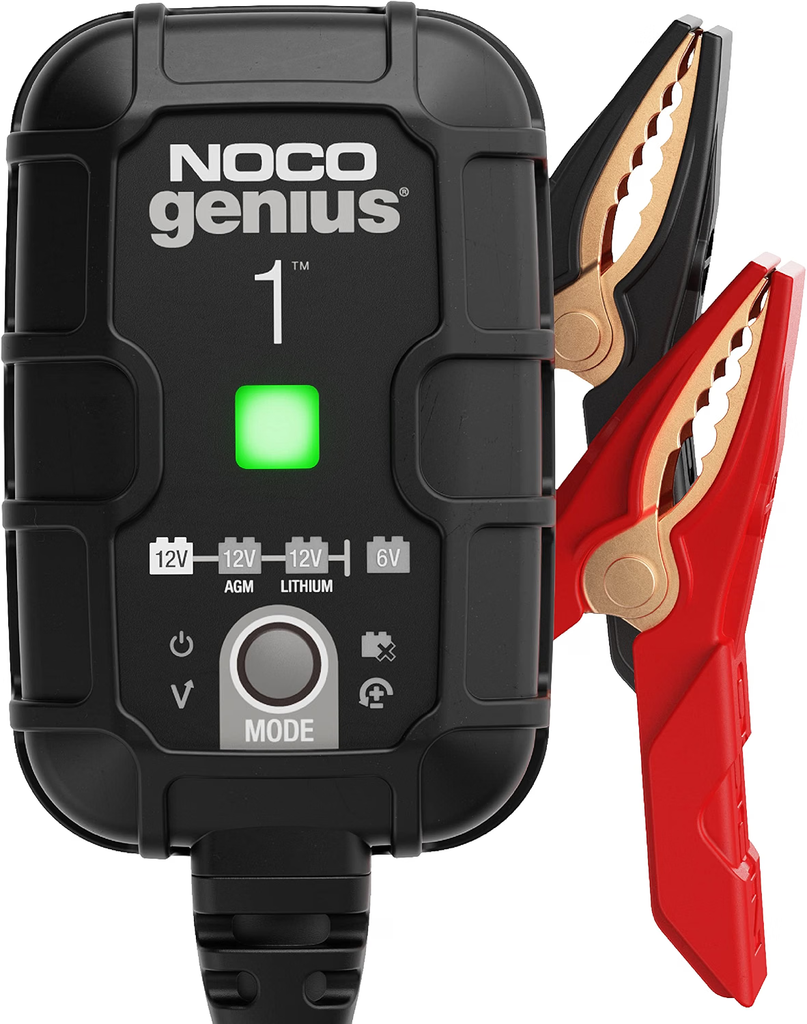
Best Low-Amp Maintainer: NOCO GENIUS1
Best for: Storage, occasional-use vehicles, smaller batteries, and buyers who care more about maintenance than fast recovery.
Why it makes sense: The compact 1-amp design supports 6V/12V lead-acid and compatible lithium batteries without paying for charging speed you may never need.
NOCO lists a 1-amp output with a charging range up to 30Ah, while its maintenance function is intended to maintain larger batteries once they are charged.
Best for: Seasonal storage, second vehicles, smaller batteries, and low-cost smart maintenance.
Skip it if: You need fast recovery on a car or truck battery. One amp is intentionally slow.
- Pros: Compact, 6V/12V support, lead-acid and compatible lithium modes, lower cost.
- Cons: Slow for larger automotive batteries.
⚠️ Common Mistake: A maintainer is not automatically a fast charger. Low amperage is fine when a battery is healthy and going into storage, but it can be frustrating when a larger battery needs real recovery.
Best Fast Garage Charger: Schumacher SC1280
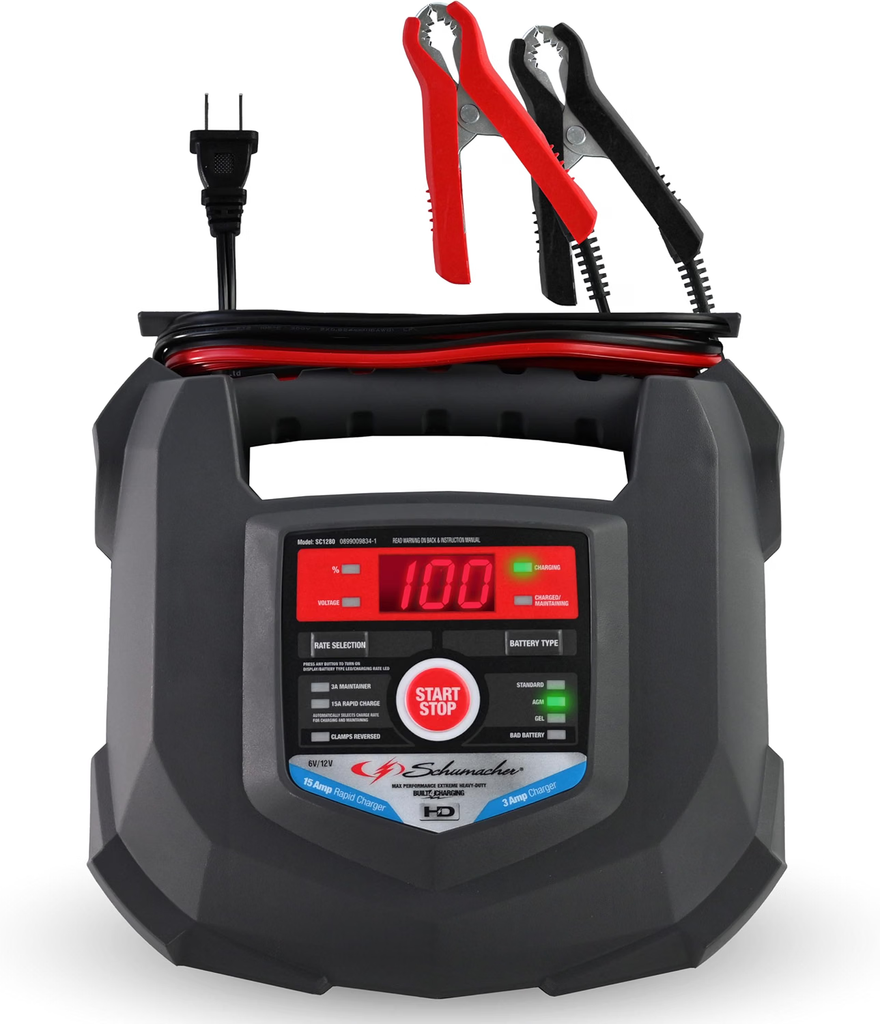
Best Fast Garage Charger: Schumacher SC1280
Best for: Home garages, cars, trucks, larger lead-acid batteries, and people who want faster charging with a digital display.
Why it makes sense: Its 15-amp charging capability is substantially faster than small maintainers, while a 3-amp maintenance function keeps it useful after the battery is charged.
Schumacher lists a 15-amp rapid charging function and 3-amp maintenance capability for 6V and 12V standard, AGM, gel, and deep-cycle batteries.
Best for: Drivers who deal with weak batteries, larger automotive batteries, seasonal vehicles, and garage projects where charging time matters.
Skip it if: You only want a tiny unit that stays attached to a small battery for months.
- Pros: Faster 15A charging, 3A maintenance, digital display, 6V/12V support.
- Cons: Larger than compact maintainers and not aimed at lithium batteries.
Best Premium Lead-Acid / AGM Charger: CTEK MXS 5.0
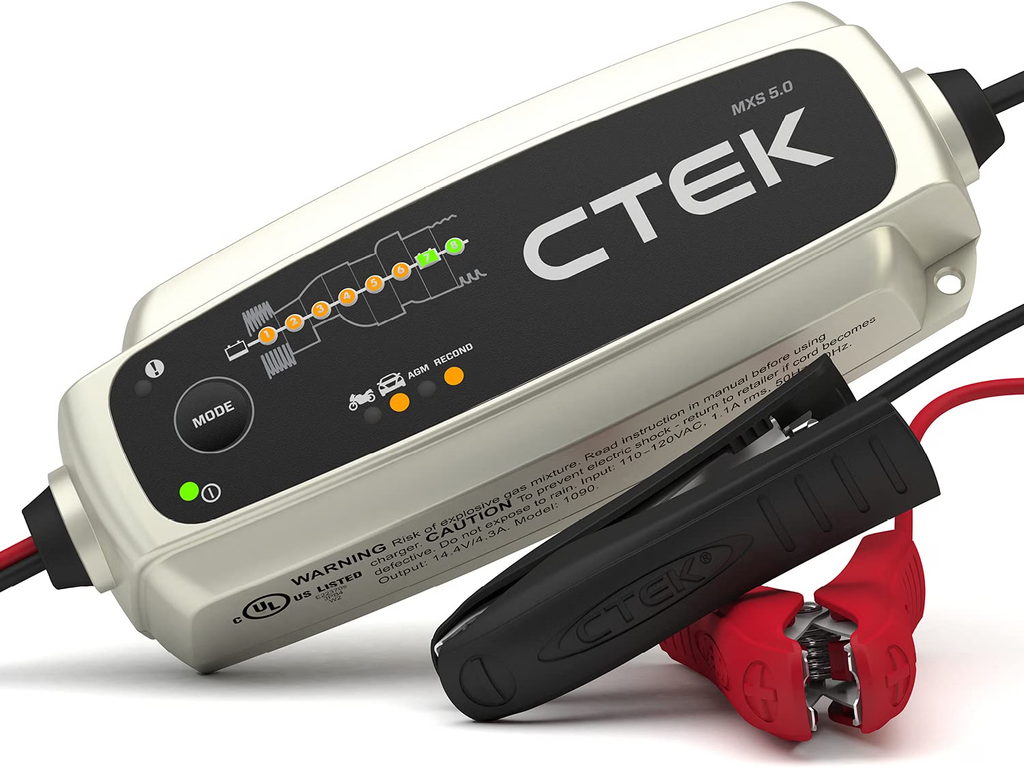
Best Premium Lead-Acid / AGM: CTEK MXS 5.0
Best for: Stored cars, AGM and EFB batteries, cold-weather garages, and owners focused on lead-acid battery care.
Why it makes sense: The North American version uses a 4.3-amp eight-step charging program with temperature compensation, AGM support, reconditioning mode, and long-term maintenance.
CTEK rates the North American MXS 5.0 at 4.3 amps for 12V lead-acid batteries, including wet, AGM, EFB, gel, and related lead-acid types. It can charge batteries up to 110Ah and maintain batteries up to 160Ah.
Best for: AGM-equipped cars, stored vehicles, collector cars, and winter storage.
Skip it if: You need 6V support, lithium compatibility, or the fastest charging possible.
- Pros: Temperature compensation, AGM/EFB support, 8-step charging, reconditioning mode, IP65, five-year warranty.
- Cons: 12V lead-acid only and premium pricing.
Best for Larger Batteries: NOCO GENIUS10
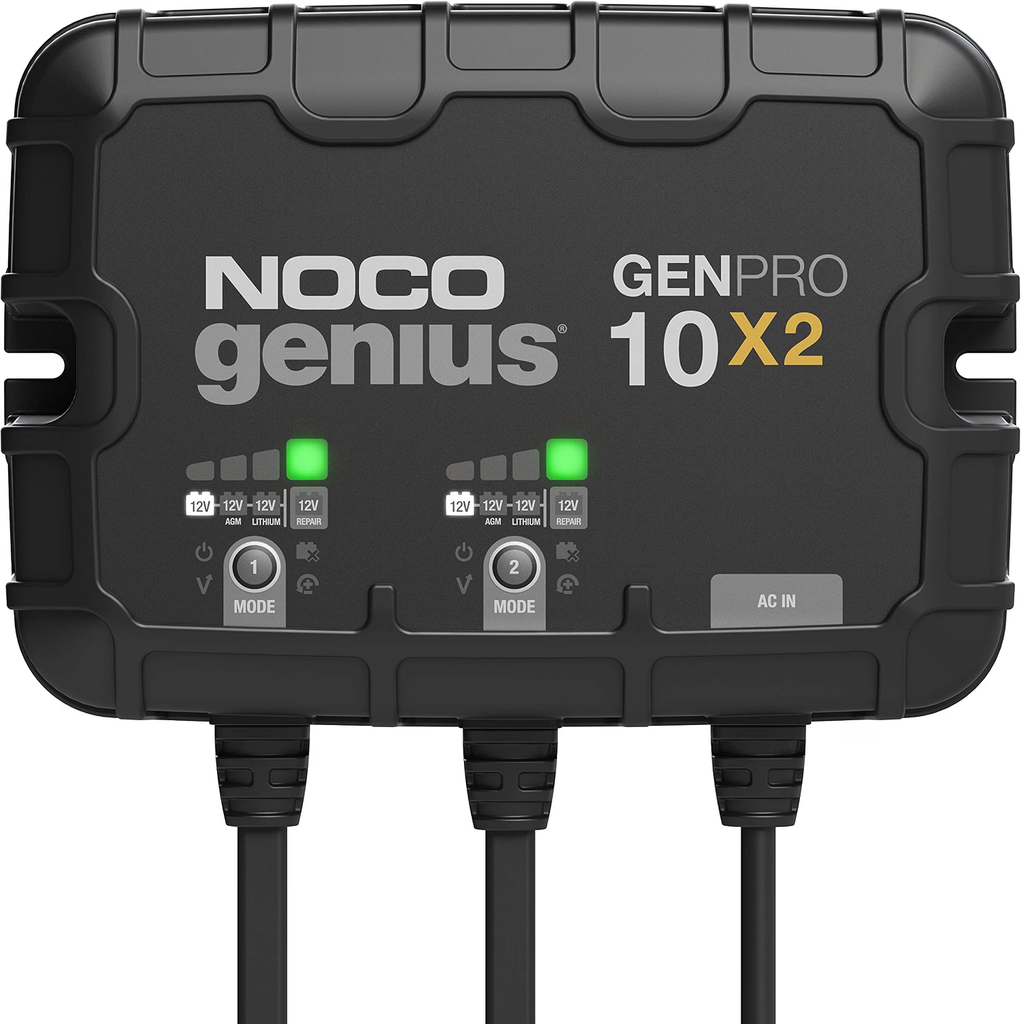
Best for Larger Batteries: NOCO GENIUS10
Best for: Full-size pickups, larger automotive batteries, deep-cycle batteries, and garages that want more charging speed.
Why it makes sense: Ten amps of output, 6V/12V support, lead-acid and compatible lithium modes, and a charging range up to 230Ah give it more headroom than smaller smart chargers.
The GENIUS10 is for the person who wants the flexibility of the GENIUS5 with more charging capacity and speed.
Best for: Full-size vehicles, larger batteries, deeper discharges, multi-vehicle garages, and some deep-cycle applications.
Skip it if: You mainly maintain one small battery and do not need the extra size or cost.
- Pros: 10A output, up to 230Ah charging range, 6V/12V, multiple chemistries.
- Cons: More expensive and more charger than small seasonal batteries need.
Best for Seasonal Equipment: Battery Tender Junior 750mA
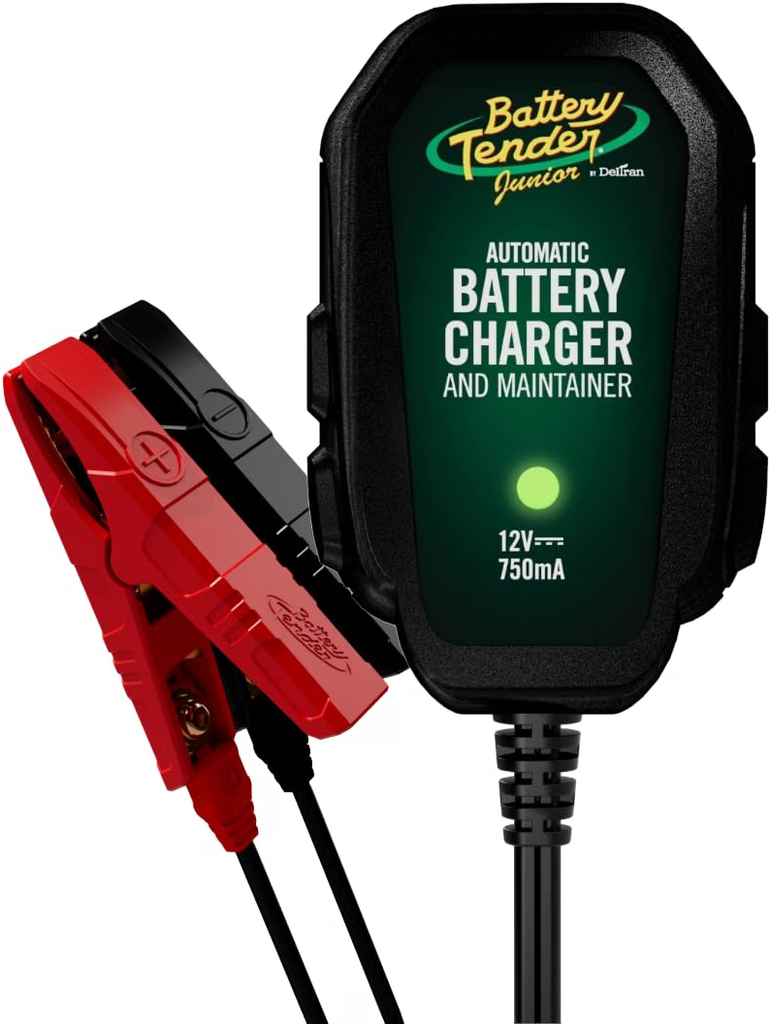
Best for Seasonal Equipment: Battery Tender Junior 750mA
Best for: Motorcycles, ATVs, lawn tractors, dirt bikes, and small 12V lead-acid batteries stored for long periods.
Why it makes sense: A 750mA smart charger is slow by design, which fits smaller lead-acid batteries that need maintenance more than rapid recovery.
Battery Tender lists this model for 12V lead-acid, AGM, gel, and sealed maintenance-free batteries from 3Ah to 30Ah. It charges and then switches to float maintenance.
Best for: Motorcycles, lawn tractors, ATVs, and small seasonal equipment.
Skip it if: You are shopping for a primary automotive charger or need lithium support.
- Pros: Simple storage maintenance, compact size, clamp and ring-terminal connections, five-year warranty.
- Cons: Only 750mA, 12V lead-acid only on this model, not a practical fast car-battery charger.
💰 Worth the Money? Spend more for charging speed or broader chemistry support only when you will use it. For a small battery that simply needs to survive winter storage, a low-output maintainer can be the better value.
How Much Charging Power Do You Need?
| Use | Good Starting Range | What to Expect |
|---|---|---|
| Small seasonal battery maintenance | About 0.75–1A | Slow charging, compact size, good for storage. |
| General car / garage use | About 3–5A | A useful balance of recovery speed and maintenance. |
| Larger batteries / faster recovery | About 10–15A | Faster charging but more size, cost, and power than simple maintainers. |
These ranges are a practical way to think about the category, not a substitute for the charger and battery manufacturer’s requirements. Battery capacity, chemistry, state of charge, and temperature all affect charging time.
When a Battery Maintainer Makes the Most Sense
- A second car sits for weeks at a time.
- A motorcycle or ATV is parked for winter.
- A lawn tractor or mower will not run again until spring.
- A classic or collector car spends most of the season in the garage.
- A work vehicle has electronics that slowly draw down the battery while parked.
- You want batteries charged before the first cold snap instead of discovering a problem afterward.
Common Battery Charger Mistakes
Choosing the Wrong Battery Chemistry
A charger can physically connect to a battery and still be the wrong charger. Check whether the battery is flooded lead-acid, AGM, gel, EFB, or lithium and use an approved charging mode.
Buying Too Little Charger
A 1-amp charger is fine for maintenance. It is not ideal when you repeatedly need to recharge large automotive batteries.
Assuming “Repair” Means a Bad Battery Is Fixed
Some chargers include repair or reconditioning modes that may help certain discharged or sulfated lead-acid batteries. They cannot fix a battery with internal physical damage, a failed cell, or normal end-of-life wear.
Waiting Until Winter to Check Everything
Cold weather is when weak batteries tend to reveal themselves. Fall is a better time to inspect batteries, charge stored equipment, check your portable tire inflator, and make sure the emergency gear in each vehicle is ready.
Battery Charger Safety
🦺 Safety First: Batteries can produce explosive gases and very high current. Charge in a well-ventilated area, keep sparks and flames away, wear appropriate eye protection, verify battery voltage and chemistry, and follow the charger, battery, and vehicle manufacturer’s connection instructions.
- Do not charge a frozen, visibly damaged, leaking, or overheated battery.
- Do not guess at battery chemistry or voltage.
- Keep the charger and cables clear of moving engine parts.
- Make connections and disconnections in the order required by the charger manufacturer.
- Do not use a lithium mode on a lead-acid battery or a lead-acid-only charger on an unsupported lithium battery.
- Use the charger only in the temperature and environmental conditions listed by its manufacturer.
Final Decision: Which Battery Charger or Maintainer Should You Buy?
Choose the NOCO GENIUS5 if you want the best balance of charging speed, storage maintenance, compact size, and battery compatibility for a normal home garage.
Choose the NOCO GENIUS1 if long-term maintenance matters more than charging speed and you want a compact lower-cost smart charger.
Choose the Schumacher SC1280 if you want faster charging for automotive and marine lead-acid batteries and prefer a larger garage-style unit with a digital display.
Choose the CTEK MXS 5.0 if your focus is premium 12V lead-acid, AGM, and EFB battery care, especially for vehicles that spend long periods in storage.
Choose the NOCO GENIUS10 if you have larger batteries, full-size vehicles, deep-cycle batteries, or simply want more charging speed and capacity.
Choose the Battery Tender Junior 750mA if you are maintaining small 12V lead-acid batteries in motorcycles, ATVs, lawn equipment, or other seasonal machines.
Frequently Asked Questions
Can I leave a battery maintainer connected all winter?
Many modern smart maintainers are specifically designed for long-term maintenance after the battery reaches full charge. Follow the instructions for your exact charger and battery rather than assuming every charger can be left connected indefinitely.
Is a battery maintainer the same as a trickle charger?
Not necessarily. A modern smart maintainer monitors battery condition and changes its charging behavior as needed. An older or basic trickle charger may simply provide low current continuously.
What amp battery charger should I buy for a car?
For general home-garage use, a smart charger in roughly the 3- to 5-amp range is a useful starting point. Higher-output 10- to 15-amp chargers make more sense when faster recovery or larger batteries matter. Always check the charger manufacturer’s battery-capacity guidance.
Will a battery charger fix an old battery?
It can recharge a healthy but discharged battery, and some chargers include modes intended for certain sulfated or deeply discharged lead-acid batteries. It cannot repair every failed battery.
Can I use the same charger for AGM and lithium batteries?
Only when the charger specifically supports both chemistries and you select the correct mode. AGM and lithium batteries have different charging requirements.
Do I need a charger if I already own a jump starter?
They serve different purposes. A jump starter is emergency equipment for getting an engine started quickly. A charger or maintainer is better for restoring and maintaining battery charge at home or during storage.
Related Guides
Keep Building Your Fall and Winter Vehicle Setup:
Why You Can Trust HardWorkerGear
HardWorkerGear looks at battery chargers as garage tools, not just boxes with the highest amp number on the label.
The useful questions are whether a charger supports your battery chemistry, whether its output matches the battery size and speed you need, whether it can maintain a stored battery automatically, and whether its limitations make sense for your garage.
For this guide, the focus is on those practical differences and current manufacturer specifications rather than pretending one charger is perfect for every battery.
Final Thoughts
A battery charger is not as exciting as a new tool, but it is exactly the kind of garage equipment that proves its value on a cold morning.
For most households, a mid-output smart charger such as the NOCO GENIUS5 is the easiest place to start. Smaller maintainers make sense for storage. Larger chargers make sense when recovery speed matters.
The important part is matching the charger to the battery before winter, not after the first no-start.